Monday, 27 May 2013

Team Work!

I’ve just finished reading an article about gratitude by David Servan-Schreiber, author of the wonderful book “Healing Without Freud Or Prozac”.  He advocates thanking those around you for what they have brought to your life and I like the idea very much.  I have a lot of people to thank for enriching my life, many friends and family members who are all amazing people, but I would like to dedicate this short blog post to my very good friend and training partner, Tracy.

I want to say a massive “thank you” for encouraging me to go to the leisure centre; it sounds crazy, but that Tuesday night, spent playing volleyball has literally changed my life.  I was despondent when the Moorside finally closed its doors; I’d been training there for many years and became fond of the people and characters I would meet on a regular basis, but looking back on it now, I’d become stuck in a rut, doing the same things time after time and not feeling motivated or inspired to try anything new.  I would also have got very little training done during the harsh winter months; the Moorside is somewhere you really don’t want to be when the weather takes a turn for the worst! 
 
Work those abs Tracy!
We’re now working out together on a regular basis, challenging, inspiring and motivating each other to try new things and push just that bit harder – “just one more rep” – “you used that weight last time, you need to increase it now” – there’s never any offence taken with these kinds of demands, in-fact quite the opposite, sometimes we laugh so much, we just can’t make that last rep!
 
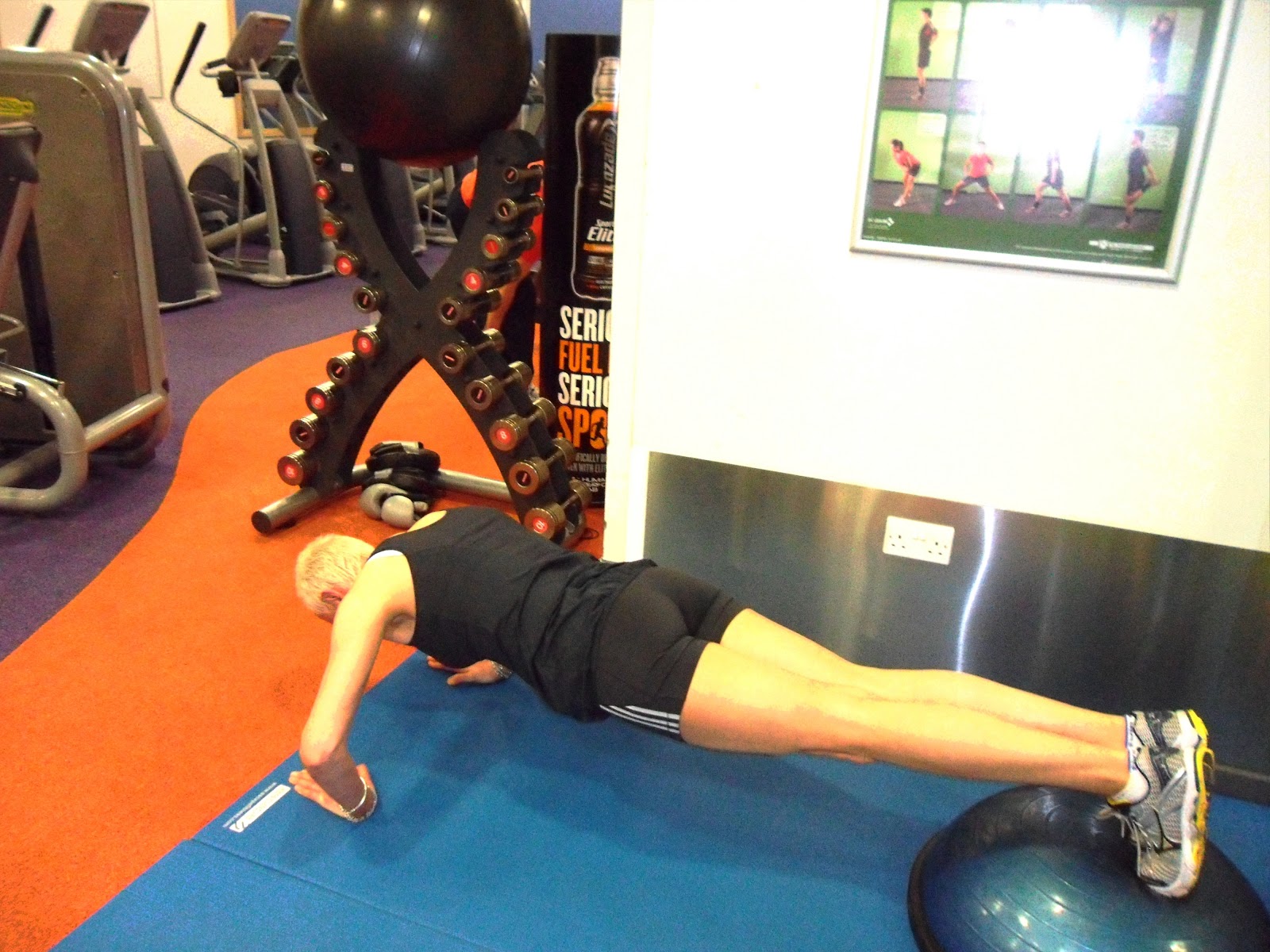
I couldn't do more than one press up on the bosu ball when we
started training, now we're doing repeated sets of 10!
Steadily over the last few months, we’ve seen and felt the many benefits of our training; as I’m sure any personal trainer would agree – it’s not what you do once in a while that makes the difference, it’s what you do on a regular basis that matters and I suppose the point I really want to make is that we can, all of us, challenge ourselves, despite age or ability, to push that little bit harder, make just that little bit more effort to improve ourselves; exercise our personal discipline muscle and if that includes inspiring someone else to feel good about themselves, then that’s a very real result!

Our jack-knife challenge - done individually we may have
given up, done together we made it!
Take great care of yourself & inspire someone else along the way!
Cathy x


Tuesday, 21 May 2013

Super Spinach

A good friend brought me some wonderful, home-grown spinach today; beautiful big green leaves that have inspired me to write this short post.

The Super Spinach

Spinach contains a spectrum of phytonutrients, discussed in more detail in a previous blog post, as well as a carotenoid called lutein; a potent antioxidant found in the macular region of the eye, the area of highest visual discrimination.  It also boasts a plethora of micronutrients including the vitamins C, E, K, B6 & folate and the minerals iron, calcium, magnesium, manganese & zinc – a pretty potent mix!

David Grotto in his wonderful book entitled “101 Foods That Could Save Your Life” writes lyrically about this wonderful leafy green and tells how the “spinach capital”, Crystal City in Texas, erected a statue in 1937 to honour both Popeye and his creator, E. C. Segar; the character was apparently responsible for a huge increase in spinach sales and was credited as saving the spinach industry!


“It would make sense that if you could develop a pill containing the significant substances in spinach, you’d have a potent weapon against cancer” (Steven Pratt & Kathy Matthhews – SuperFoods).
 
The power of nutrition!
Cathy x

Saturday, 11 May 2013

Mighty Magnesium

Magnesium is a vital macromineral involved in numerous biological processes and over 300 enzymatic reactions. The human body contains approximately 25g of magnesium, 50-60% of which resides in bone, hence it forms part of the structure of bones and is required for proper bone mineralisation along with the minerals calcium and phosphorus; absorption is enhanced by vitamin D.  It is also involved in aerobic energy production, protein synthesis, muscle contraction & relaxation and nerve impulse transmission. 
 
Magnesium plays a vital role in aerobic metabolism

Due to its role in muscle contraction, it is essential for the normal rhythm of the heart and as a potent vasodilator (opens up blood vessels) has the ability to lower blood pressure.  Studies suggest that coronary heart disease is more common where magnesium levels in water supplies are low and that magnesium is protective of cardiac muscle. Research indicates that magnesium can help regular blood sugar levels and a recent study suggests that low magnesium levels are negatively correlated with the development of metabolic syndrome, insulin resistance and type 2 diabetes.
 
According to Dr Qais Faryadi, magnesium efficiency can reduce depression, irritability, anxiety & tension; he refers to it as "nature's tranquiliser" due to its wonderfully calming effect upon the nervous system.  Our bodies use up more magnesium when we are under stress - the more stressed we become, the more magnesium is used up, this results in a vicious cycle as magnesium levels get lower, our stress levels get even higher!
 
The magnesium content of food varies substantially, refined and processed foods generally have the lowest magnesium content; rich sources include green leafy vegetables, avocado, whole grains, nuts and seeds.  

Leafy greens - a rich source of magnesium
Not all available forms of magnesium supplements are easily absorbed by the body and high doses may cause diarrhoea & stomach upsets, so do take advice prior to taking this or any other single supplement.

A truly magnificent mineral!
Cathy x
 
Duffine, A., E., Volpe, S., L. (2013) Magnesium and Metabolic Disorders. Magnesium in Human Health and Disease, Nutrition & Health, pp 129-138
 
Faryadi, Q. (2012) The Magnificent Effect of Magnesium to Human Health: A Critical Review. International Journal of Applied Science& Technology, Vol. 2, No.3, pp.118-126

Friday, 29 March 2013

Powerful Phytonutrients

Anyone performing demanding, physical training on a regular basis needs to ensure they are consuming a diet rich in food sources of antioxidants to repair muscle damage, help prevent injury and promote enhanced immune response.  Intense exercise increases the production of free-radicals, by-products of normal biochemical reactions and energy production, sometimes believed to be partly responsible for post-exercise muscle pain; antioxidants have the ability to disarm free-radicals thus making them harmless.

Phytochemicals are a diverse range of naturally occurring plant compounds, many with antioxidant potential and a spectrum of health-promoting effects including modification of inflammation, thereby not only promoting repair & recovery but also helping reduce the risk of cancer & heart disease. 
 
Bursting with antioxidants!
Phytochemicals or phytonutrients as they are sometimes known include the carotenoids beta-carotene, found in red, orange & yellow coloured fruits & vegetables and lycopene found in tomatoes, tomato products, pink grapefruit & watermelon and the flavonoids including anthocyanins found in red & purple foods such as berries & black grapes and quercetin found in apples, sweet potatoes, kale, watercress, broccoli & onions. 
 
Hence a diet rich in fruits & vegetables is vital to the health of all individuals, but particularly pivotal to those who train on a regular basis and value the transformational effects that exercise has upon both their physical & psychological health. 

Tomatoes & tomato products - rich sources of lycopene


Monday, 4 March 2013

15 Protein-Packed Facts

1. Proteins contain the elements carbon, hydrogen, oxygen & nitrogen


2. Protein is found in every cell

3. Protein is a key component in the structure of the body; some have functional roles, ie enzymes and others regulatory roles, ie hormones

4. Proteins play an important role in the function of the immune system

5. Body proteins are continually being broken down and replaced

6. Proteins are composed of linear chains of amino acids; their sequence is encoded in our DNA

DNA double helix

7. Different proteins contain different proportions of amino acids

8. Twenty-one amino acids are involved in the synthesis of proteins

9. These can be separated into two separate groups – indispensable (essential) and dispensable (non-essential)

10. Indispensable amino acids cannot be synthesised by the body and must be provided in the diet

11. Dietary sources of protein can come from both animals & plants

12. Animal sources of protein include meat, fish, eggs & dairy products; as they contain substantial amounts of indispensable amino acids they are termed “complete protein foods”

13. Plant sources of protein include cereals, legumes, nuts & seeds; they lack or don’t contain sufficient quantities of at least one amino acid and are therefore termed as “incomplete protein foods”

14. Plant sources can be combined to overcome the “limiting” amino acid, ie rice & lentils, beans on toast

15. The protein requirements of athletes depends upon the type, intensity and duration of training.

Eat wisely
Cathy x 

Sunday, 17 February 2013

Phoenix Rising!

My blog posts have been few and far between over the last couple of weeks as I succumbed to a chesty cough and have not been feeling well.  I hate not being on top form and what is more, having to admit it; for some reason when you work in the field of health you believe you shouldn’t become ill and think that others will judge your knowledge & expertise on whether or not you can remain well & vibrant, day in/day out. This is obviously not the truth, none of us can feel well all the time, our immune systems fight to keep us so, but we’re all susceptible to vulnerability at times.  However, on this occasion, I have to admit that I’m now rather pleased this particular virus found its way through a chink in my armour.

I remember many years ago being told by someone that in order to construct, sometimes you have to completely destruct; and that’s what I feel has happened to me.  During the two week period, I decided to invest a little more in myself and knew that in order to do this I needed some help; admitting that we don’t always have all the answers and can’t solve everything is hard to do, but incredibly empowering; so even though I practice what I preach in terms of diet & exercise, I decided to invest in some complementary therapies to assist me with my healing.  I remember once being contacted by a lovely lady who found the courage to make an appointment to see me to address weight management issues she had been struggling with for many years; during an initial phone call, I could tell she was excited at the prospect of getting some help and was surprised when, a couple of days before her appointment, she cancelled.  She conveyed that the reason for doing so was that her partner had told her she shouldn’t need any help, that losing weight was simple and she should be able to “just get on with it”.   Her message saddened me because we can’t always know everything, we all need a helping hand and guidance to make life changes and I think it takes great courage to admit that. 


My first positive move was to book an acupuncture session with Karen & New Mills Alternative Clinic; I’ve had three sessions up to now and would highly recommend it; I feel like I’ve been completely re-wired!  Since the very first session, I’ve literally moved mountains; I’ve finished work that I’ve been procrastinating over for ages, joined associations and booked myself on courses that will enhance my perpetual learning and begun work on a new dietary & supplement regime, one that I’m currently experimenting with upon myself and which has given me more energy and vitality than I’ve felt in a very long time.  I’ve joined a new leisure centre and over the last few days my renewed energy has already seen me trying the spinning classes, having a go at a boot camp session, playing volleyball & tennis and working on a one-to-one with one of the personal trainers on a whole new repertoire of abdominal exercises. I’ve signed up to Parkrun UK and intend to do the Saturday morning 5K run in a local park, not only to be able to get to meet new people who share a passion for running, but to get back to racing, having picked up a copy of Runners World last week to search for a 10k to give me a training goal.  Knowing that I possibly wouldn’t be deluged with cards or flowers last Thursday, I decided to treat myself and booked in at the clinic for a full body massage – absolute heaven and as with the acupuncture, something I now intend to do more regularly, to take the best possible care of myself.
Phoenix Rising
Therefore, a negative experience has turned into a plethora of positives and in the process I’ve learned a lot about myself. I do believe that if we continue to push our bodies and minds without making time for rest and relaxation, we become ill; not only because our immune system may be compromised but it’s our body’s way of saying “enough”, you need to rest and I’ve given you warnings that you haven’t heeded, so now you might just have to listen up and take some time out! I’ve also learned that it’s ok to ask for help, to admit that we need guidance back to wellness and beyond; it’s a very pro-active and empowering thing to do and who knows where or what it might lead to!

Nourish Yourself!
 
Cathy x
 

Saturday, 26 January 2013

A Sweet Treat

I really don’t like the snow and after a few days of not being able to get out running, I’m literally climbing the walls.  The treadmill at the gym suffices for a few days, the turbo trainer at home is tolerable and I’ve enjoyed walking much more than I normally would, but I miss the way running makes me feel; the wonderful feeling of movement, the abundance of fresh air, the soreness of hard-worked muscles afterwards, the stress relief it provides and the positive outlook it instills; for me, there really is no substitute.  So today, I’m feeling very excited as I see the white stuff melting away and feel the temperature rising; with a week of milder weather forecast, I’m determined to get out as much as I possibly can, making up for the last week.

Mary Berry eat your heart out!

I get very hungry when I up the miles and often feel like something sweet, particularly during the evening or after a long run, but avoid reaching for energy-dense, nutrient-poor foods to quickly satisfy the hunger, not wanting to undo all the hard work & discipline I’ve invested.  All week I’ve been thinking about fruit cake, but when I’ve visited the supermarkets I’ve not fancied the mass-produced slabs on offer, so today, I decided to make my own.  The recipe was given to me by a friend who is an amazing cake-maker, so I don’t expect my version to be quite as good as hers, but I’m pretty pleased with the results.  I chose to include a dried fruit mix of sultanas, raisins, cranberries, blueberries & cherries, so it’s packed with nutrients and fibre and will help provide me with some of the extra energy I’m going to need.

The friend I mentioned above invited me to tea before Christmas and it was a fabulously civilised and elegant affair; the best china and the most amazing cakes, including meringues, mince pies, lemon cakes & fruit cake. It was a wonderful treat, pure indulgence and I hope I get invited again – perhaps for a summer version!  You see, I don’t believe in diets, they are synonymous with deprivation; a period of time spent feeling miserable & hungry and although I don’t advocate eating copious amounts of cake, the odd treat alongside a predominantly healthy lifestyle, won’t do any harm at all.

A very elegant afternoon tea!
So, as I sit typing, I’m waiting for the fruit loafs to cool to be able to sample same and then I’ll wrap them in foil in readiness for a powerful week of daily discipline in preparation for spring.

Le Fruity Cake

450g Dried fruit (I used sultanas, raisins, cranberries, blueberries & cherries)
225g Butter
340g Sugar
340g Plain flour
3 eggs
1 teaspoon baking powder

2 x 1lb loaf tins
 
·         Put dried fruit in pan & cover with water – boil for 5 minutes
·         Put butter in a large bowl
·         In a separate bowl whisk the eggs & sugar together
·         Drain the dried fruit and pour over the butter
·         When the butter has melted add the egg/sugar mix to the fruit & butter
·         Fold in the flour & baking powder
·         Mix well (do not beat)

Cook on gas mark 3 (150°c) for approximately 50 minutes – 1 hour

Thank you G!
 
Cathy x

Monday, 21 January 2013

Food & Mood

I’ve long been fascinated and spent many years studying the connection between food & mood; how our moods affect our eating habits and how the nutrients contained within our diet can influence the way we think and feel. 

Life events, either good or bad, influence the way we feel, we rarely remain feeling neutral during either, but often it’s the way we’re feeling that determines how we react to the event. Fear is endemic in our society, maybe not the Freddy Kruger at the window sort of fear, but the underlying, chronic and pervasive fear of a loss of security; fear that we may lose our jobs, fear that life will change and throw us a curve ball, fear for the future, for our health and for the health of loved ones.  These fears are often unfounded, but built upon wanting everything to be secure and stay the same and when it doesn’t and we feel we’re not in control of what may happen, it’s then that we may turn to food or alcohol to comfort, distract, numb and self-medicate our path to try to achieve peace of mind.  Foods high in fat and sugar make us feel better, if only for a very short while, maybe because they were the foods we were given as children to comfort and reassure or because we feel that the adverse life-event, albeit resolved, has earned us some kind of reward and we deserve a treat.

As Robert E Thayer discusses in his book, Calm Energy, “bad moods are characterised by low energy and good moods with high energy”.  When we’re feeling low, depressed or battered by some adverse life-event we have little energy, but when something positive happens to us, i.e. we win £100 on a scratch card, we’re excited, we have high energy and our mood is positive.  It therefore makes perfect sense that during the low energy, low mood period, in an effort to raise our energy levels as quickly as possible, because we all want quick fixes and don’t like feeling low, we reach for high calorie and energy-dense foods.  It’s a vicious cycle, underlying thoughts and feelings of fear and negativity lead to a bad mood and low energy which encourages us to make dietary choices depleted in nutrients that positively affect our mood; we reach for foods high in fat & sugar which only makes us feel worse long-term, promoting feelings of guilt and inevitably leading to weight gain, dissatisfaction with ourselves, a lack of control and back to a low mood and negative thoughts.
 
There are a spectrum of nutrients that affect mood, even vitamin C deficiency, more commonly associated with scurvy, has demonstrated an increase in fatigue and depression and according to Dr David Benton, a leader in the field of research exploring the impact of diet upon behaviour, vitamin C influences the functioning of dopamine, a neurotransmitter in the brain that plays an important role in controlling mood & motivation.  A diet containing foods rich in vitamin C, is also a diet that is rich in other vitamins, minerals and antioxidants and one which contains a plethora of nutrients which have demonstrated a positive effect on our mood, but during times of low mood, our conditioning unfortunately doesn’t tell us to reach for the fruit bowl it tells us to head for the biscuit tin instead; spiralling levels of obesity provide us with a “weight of evidence” to support this.
 
The reality is that nothing and no-one is secure, everything changes; it’s learning to be in flow, not constantly buffered by the winds of change that’s the key.  It’s not easy to do, I’m my own work in progress, but by not buying into the emotion and not looking for short-term quick fixes to everything we deem to be “bad” in our lives, we can step back and take control of the one thing that only we can – the food we choose to eat, to help heal both body & mind.
 
If more of us valued food & cheer above hoarded gold, it would be a much merrier world - J.R.R Tolkien

Cathy x
 

Wednesday, 2 January 2013

Pro-Action -v- Re-Action!

One moment, whilst I step gingerly onto my soapbox …
 
 
Having missed the majority of the second episode, I’ve just caught up on ITV’s “Weight Loss Ward”; a two-part documentary about the specialist weight loss ward of the Sunderland Royal Hospital.  I watched with mixed feelings of empathy, anger and sadness as a “conveyor belt” of morbidly obese individuals struggle to reduce their body mass index to a level that they hope will then give them the opportunity to be added to the expanding list of those awaiting bariatric surgery.

The first question that comes to mind, and was actually voiced by one of those taking part, is how the hell did they get like that in the first place; those presenting at the clinic don’t just have a few pounds to lose, often they need to lose the weight equivalent to two “normal” sized individuals.  Before you answer this question … pause for a second and reserve judgement.   None of us are immune from this obesity-epidemic, although we like to think we are; the stone they effortlessly gained over six months, turned easily into two a year, became four in two years and so on and so forth – sound familiar?  I demonstrated the rapidity of how body composition can change with my own personal experience, detailed in the blog post of the 7th of December – it’s very easy and once control is lost, the downward spiral escalates and becomes increasingly difficult to resolve; 4 lbs to lose is achievable - 4+ stone can be daunting!

I do understand that when someone gains so much weight, they simply don’t know where to begin and surgery may be the only way to even get them mobile; it may well be the only choice they feel they have, their last chance before obesity-related diseases seriously affect or cut short their lives, but my anger rises when I know that education is undoubtedly the answer to prevent this from happening in the first place!   When will the powers that be realise that nutrition education needs to begin in schools to prevent future generations befalling the same fate and be available at other life stages through colleges, children's centres and adult education; with no disrespect, it’s a fact that the majority of people know absolutely nothing about nutrition – if they did, then the country wouldn’t be in this state in the first place – prevention, prevention, prevention!!  I’m sure that those featured on the programme would agree that if they had been given help, information and education about nutrition and exercise earlier in their lives, they would have been able to make more informed choices.  Help that includes demonstrating how to prepare quick and simple, nutritious food; we are inundated with TV cookery programmes, but we’re not all chefs (me included) and often don’t want, or have time, to spend hours in the kitchen; I can put a healthy, nutritious and inexpensive meal together for myself in very little time.  Information and education that explains why a diet high in saturated fat, salt and sugar will not only help pile on the pounds, year after year, but will also promote pro-inflammatory diseases such as cardiovascular disease, diabetes, arthritis and possibly even cancer – all delivered in a way people can understand and relate to - simple but effective guidance; the absence of which is leading to an obesity epidemic, with people literally becoming trapped within their own bodies, unable to enjoy the simple things in life and requiring a cocktail of drugs to manage the diseases that accompany it.    

One patient, having undergone surgery, failed to lose any weight whatsoever; why – because she simply carried on doing what she had always done – eating energy dense foods, only in smaller portions, more frequently!  The dieticians at the hospital obviously do their best to provide nutritional information, but you can’t change someone’s eating patterns and re-educate them in 15 minutes and there are simply too many people for them to deal with.  If the Government doesn’t begin to invest in those of us who are qualified and passionate about slowing the progression of this epidemic by supporting, financing and allowing us the opportunity to create programmes to educate the next generation, then this situation can’t and won’t change and specialist obesity wards will be needed in each and every hospital throughout the country; without action, the UK will undoubtedly reach and possibly exceed predictions that a staggering 55% of adults will be clinically obese in not too many years from now!   Since qualifying I've approached several schools with a view to providing nutritional education programmes, but the effort has come to nothing because there isn’t a provision within current curriculums and no funding is available – although I’m sure this has to be more economical than the estimated annual £5 billion cost of dealing with obesity, as quoted in the recent study published by the Royal College of Physicians; I’ve written and presented  sessions for free on several occasions which simply isn’t sustainable, but as Martha Stipanuk rightly states in her book on human nutrition, “the knowledge and science of nutrition is only of academic interest unless it can be applied to the improvement of the health and well-being of individuals and populations”. 

I notice that we are being bombarded with TV adverts about weight loss -as if that’s all that matters; I want to shout from the rooftops that is isn’t just about weight, it’s about body composition, it’s about eating nutritious food, abundant in vitamins, minerals and antioxidants, it’s about moving our bodies to work our cardiovascular system, which in turn promotes good mental health, optimum bone health and boosts self-esteem and gives us a sense of achievement.  Nutrition isn’t about deprivation and not being able to have the foods we consider “bad”, it’s about helping people to understand what a diet comprised mainly of these foods can do to our long-term health and armed with this knowledge they can then decide to make healthier alternative, empowering, informed choices.
 
OK, enough, I’ll step down now and pray that my passion persuades!

“There are, in effect, two things: to know and to believe one knows.  To know is science.  To believe one knows is ignorance” 
Hippocrates

Cathy x
 

Tuesday, 1 January 2013

New Beginnings

I wish for you a wonderful New Year filled with peace, joy, happiness & good health.
 
 
Cathy x

Monday, 10 December 2012

The present of time

My health & fitness are of primary importance to me and the benefits of my personal discipline to both reach into the corners of every aspect of my life; helping me to stay well during stressful times & enabling me to pick myself up when people or events have pulled the rug from under me.  The last few years, spent mostly studying, have been extremely testing and I truly don’t believe I could have sustained the mental strength it required without optimum nutrition and the freedom to breathe that running gave to me.  I can’t take all the credit though, it’s been my mum that was always at the end of the phone when the going got tough; often I don’t think she fully understood everything I talked about; research papers, deadlines, grades etc., but she gave me her time and she allowed me to talk and in talking I could hear myself and in so doing I found solutions and answers that always lay within but just needed a voice.   Now that is behind me and my weekends are not spent tied to a desk, I’ve devoted the last two Sundays making plans and preparing for Christmas with her; she isn’t physically able to do what she once could and so now I use the vitality and energy that my lifestyle rewards me with to do what I can to make this a special time.  There are many things that I would like to do for my mum – buy her a bungalow, take her on a guided tour of Rome and the Sistine Chapel and maybe one day I will be able to, but for now I give her my time, which I believe is one of the greatest gifts, particularly at this time of year, that we can give to another soul.

Time has a wonderful way to show us what really matters
Margaret Peters
Cathy x

Friday, 7 December 2012

Scales of Measure

I want to share with you the following, in order to demonstrate that focusing upon weight and being a slave to the scales is definitely not the best indicator in determining the health of your body!

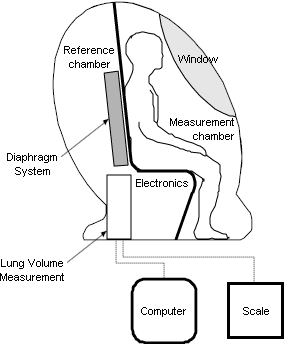
In January of this year I returned to MMU to complete the final two modules of my MSc, one of which was based upon body composition.  This literally means what it says, what the body is composed of, i.e. fat mass and fat free mass; fat mass is the amount of fat in the body and fat free mass is everything else, i.e. water, protein (muscle) & mineral (bone).  We were extremely fortunate to have access to a range of body composition measuring tools, one of which has the amazing title of “air displacement plethysmography”, more familiarly known as the Bod Pod; a very expensive and state-of-the-art piece of kit that measures changes in air volume and pressure to determine the fat mass and fat free mass of the lycra clad individual inside!
 
Cross-sectional view of the Bod Pod
 
I decided to base my research for this module upon how a personal commitment to a meticulous nutrition & exercise discipline would enable me to improve my physique and reduce my total fat mass; after all, if you’re going to advise others to make lifestyle changes, you must first be prepared to do so yourself! 

My first measurements undertaken in the bod pod on the 1st of February 2012 revealed the following:-


Weight

74.5 kg

Body Mass Index (BMI)

23 (normal 20-25)

Waist Circumference

79 cm

Fat Mass

19.9%

Bod Pod Rating

Lean

Obviously I was very pleased with these results, but I wanted to see if I could improve upon them and set myself a goal of approximately 7 weeks in which to do so.  However, things did not proceed as planned and the second module being undertaken was incredibly demanding and time-consuming, so much so that I was literally working on it day and night.  Dedicating every spare moment sat at the computer, in order to meet submission deadlines meant that I couldn’t possibly adhere to my proposed plan and although I didn’t adopt unhealthy eating patterns, I didn’t dedicate the time that I would normally to preparing my meals.   My running timetable decreased to just a couple of times per week and my attendance at the gym reduced by half and as such, my energy intake decreased as I obviously didn’t require the same amount of fuel if I wasn’t training.  The 7 seven weeks passed quickly and I returned to the lab on the 21st of March 2012 where a repeat of the same measurements revealed the following:- 


Weight

72.9 kg

Body Mass Index (BMI)

22 (normal 20-25)

Waist Circumference

83 cm

Fat Mass

22.9%

Bod Pod Rating

Moderately Lean

So, let’s take a closer look at this; due to my decreased energy intake my weight had reduced by 1.6 kg, reducing my BMI measurement accordingly; now if these were the only measurements you were using to assess your health, you would have good reason to think that this was beneficial.  However, as you can also see my waist circumference measurement, a good measure of central fat distribution and predictor of increased risk to health, had in-fact increased by 4 cm, taking it above the recommended 80 cm cut-off and my fat mass had increased by 3%, facilitating a reduction in my bod pod fitness rating. 
 
Central & abdominal adiposity - associated with the risk
of insulin resistance, the possibility of developing
type 2 diabetes and cardiovascular disease

This was definitely not the result I was hoping to achieve, but nevertheless the data is revealing in several ways; it demonstrates that physical exercise is essential in maintaining fat free mass, reveals how rapidly body composition can change and how ineffective focusing solely upon weight and BMI is in determining the risk of developing weight-associated diseases such as type 2 diabetes and cardiovascular disease. 

Clients often ask me how quickly they can expect to see positive results from adopting recommended changes - healthier eating patterns and carrying out some form of physical exercise and I think that they seldom believe me when I tell them just a matter of weeks; I think the results from this unintentional but nonetheless valuable reverse development, reveal this to be the truth!

 Cathy x